LIVE
Live Aurora Forecast

Can You See the Northern Lights Up North Tonight?

Tonight's answer for the Straits, Petoskey, Traverse City and the Sunrise Side — from live NOAA data.

Tonight's Northern Michigan Outlook CHECKING…

Loading tonight's aurora outlook…

Best viewing
Best conditions
Kp forecast
Moon
Cloud cover tonight
Mackinaw City Petoskey Old Mission Presque Isle Empire

Verdict: Pulling live data from NOAA's Space Weather Prediction Center.

Right Now

🌌 Live Aurora Conditions

Current Kp
NOAA planetary K-index
Tonight's Peak Kp
Max predicted Kp, tonight 6PM–6AM ET
Storm Level
NOAA G-scale, next 3 days
Moon
Darker skies = better aurora

3-Day Kp Forecast

← swipe for the full 48-hour forecast →
Kp 0–3 quiet Kp 4 active Kp 5–6 storm Kp 7+ strong storm
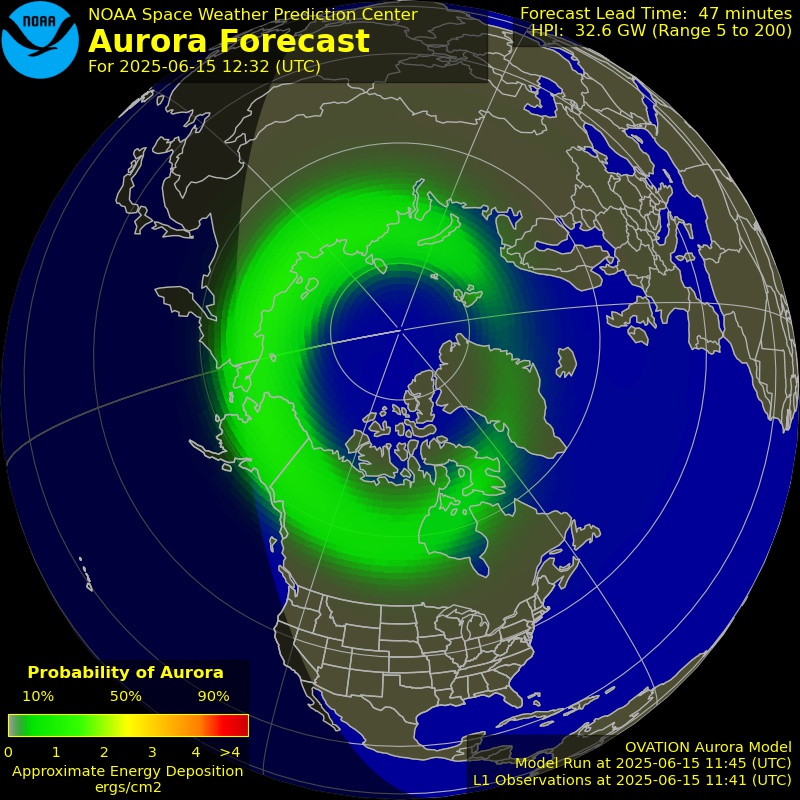
Where the Oval Is

🗺️ Live Aurora Oval & Northern Michigan Cloud Cover

NOAA OVATION aurora forecast map, northern hemisphere — shows where the aurora oval currently sits relative to Michigan
NOAA OVATION 30-minute forecast · refreshes every 5 min

Cloud cover, 10 PM – 2 AM

LocationTonight
Mackinaw City / HeadlandsLoading…
Petoskey / Little Traverse BayLoading…
Old Mission Point (Traverse City)Loading…
Presque Isle (Sunrise Side)Loading…
Empire / Sleeping BearLoading…

Averaged across tonight's viewing window from the National Weather Service gridpoint forecast. Clear beats close — a 20% sky an hour away usually beats a 70% sky in your driveway.

Reading the Numbers

📊 What Each Kp Level Means Up North

The Kp index (0–9) measures global geomagnetic activity. Northern Lower Michigan sits at roughly 53–55° geomagnetic latitude — excellent by lower-48 standards, but about a degree and a half south of the Upper Peninsula. In practice that means you need roughly one Kp level more here than they do across the Bridge.

KpNOAA ScaleWhat you'll see from Northern Lower Michigan
0–3QuietNothing visible. Good night for the Milky Way instead — the dark sky parks are worth it regardless.
4ActiveCamera-only at best. A phone on night mode may pull faint green off the northern horizon from the Straits; your eyes probably won't.
5G1 Minor StormThe realistic threshold. Visible glow low on the northern horizon from a dark north-facing shoreline. Worth the drive to the Headlands or Wilderness.
6G2 Moderate StormGood display — arcs climbing above the horizon with colour to the naked eye, and visible from most of the region, not just the Straits.
7G3 Strong StormThe night people drive for. Pillars and motion, visible from Traverse City and the Sunrise Side, not just the northern tip.
8–9G4–G5 Severe/ExtremeOverhead, sky-filling, and visible even from town — the May 2024 class of event. Cancel your plans.
Marginal night? At Kp 4–5 the Upper Peninsula genuinely has the edge — it's far enough north that the same storm reads a level stronger. Mackinaw City to the UP shoreline is a 10-minute bridge crossing. Our sister site has the UP view: 906dashboard.com aurora forecast →
Where to Go

📍 7 Best Places to See the Northern Lights Up North

The formula is dark skies plus an unobstructed view north over open water. Northern Lower Michigan's real advantage isn't latitude — it's that Michigan concentrated most of its designated dark sky land up here, and nearly all of it faces north over Lake Michigan or Lake Huron.

International Dark Sky Park
MACKINAW CITY · THE STANDOUT

1. Headlands International Dark Sky Park

The best aurora perch in the Lower Peninsula and one of the first International Dark Sky Parks in the world. 600 acres of old-growth forest on a dark, north-facing Lake Michigan shoreline at the very top of the peninsula. Open free, 24 hours, with a heated event centre. Park info →

MI Dark Sky Preserve
EMMET COUNTY · WILDERNESS DARK

2. Wilderness State Park

Twenty-six miles of undeveloped Lake Michigan shoreline west of Mackinaw City, and a state-designated Dark Sky Preserve. Darker than the Headlands with a similar north-facing horizon — the trade is fewer facilities and no winter plowing beyond headquarters. Park info →

MI Dark Sky Preserve
PRESQUE ISLE COUNTY · LAKE HURON

3. Thompson's Harbor State Park

Five miles of quiet Lake Huron shoreline between Rogers City and Alpena, with almost no light dome in any direction. The Sunrise Side's darkness is genuinely underrated — there is very little between here and the water. Park info →

MI Dark Sky Preserve
ALPENA AREA · PLOWED IN WINTER

4. Rockport State Recreation Area

An old limestone quarry and harbour north of Alpena, designated a Dark Sky Preserve and — unusually for this list — plowed through the winter. That makes it the most reliable cold-season option on the Huron side. Park info →

MI Dark Sky Preserve
ALCONA / ALPENA · REMOTE

5. Negwegon State Park

The hardest to reach and the darkest of the Huron preserves — a rough sand access road, no facilities, and miles of undeveloped shoreline. Bring a vehicle you trust and don't attempt it in mud season. Park info →

TRAVERSE CITY · BEST IN THE SOUTH

6. Old Mission Point, Traverse City

The tip of Old Mission Peninsula puts water on three sides and a north-facing horizon straight up Grand Traverse Bay, with the 1870 lighthouse as a foreground. Traverse City's light dome sits behind you rather than in front. The best option if you're not driving to the Straits.

PETOSKEY · MOST ACCESSIBLE

7. Petoskey State Park & Little Traverse Bay

A north-facing bay shoreline minutes from town, with sand beach and no obstruction across the water toward Harbor Springs. Not the darkest option here, but on a Kp 6+ night it's more than dark enough — and you can be standing on it ten minutes after the alert.

Michigan designates six state Dark Sky Preserves in total; four of them are in the area this dashboard covers. Full list and event calendar: Michigan DNR dark sky parks →
Field Guide

🧭 How to Actually See It (Not Just Chase It)

The checklist

Kp 5+ forecast or live — the realistic bar at this latitude
Clear northern sky — cloud table above
10 PM – 2 AM is the statistical sweet spot; substorms pulse in 20–40 minute waves
Dark adaptation — 20–30 min, no phone screens (red light mode if you must)
Face north over water — Lake Michigan at the Straits, Huron on the Sunrise Side, Grand Traverse Bay at Old Mission
Patience — the aurora breathes; a dead hour can explode in minutes

Best time of year

Geomagnetic activity statistically peaks around the equinoxes — September–October and March–April are the prime windows, combining an active sun with long nights. Fall has the added advantage of comfortable shoreline temperatures and it overlaps peak colour, so a single trip can cover both. Deep winter offers 14+ hour nights but heavy lake-effect cloud off both lakes. June–July is weakest: the northern sky never gets fully dark. Through 2026 we're still on the high plateau of Solar Cycle 25, so strong-storm nights remain more common than average.

Phone photography in 20 seconds

Night mode on, brace on a rock or tripod, 3–10 second exposure, focus set to infinity. At this latitude the camera-sees-it-first effect is more pronounced than in the UP: if the northern horizon shows green in the photo but grey to your eyes, stay put. It's often building.

Be Ready

🎒 Aurora-Chasing Gear That Earns Its Keep

Disclosure: As an Amazon Associate, Up North Dashboard earns from qualifying purchases. Links open on Amazon at no extra cost to you.
🔦

Red-Light Headlamp

Preserves your night vision — and everyone else's. At a designated dark sky park, white light is genuinely bad manners. Red-only LED, zoomable.

View on Amazon →
📷

Travel Tripod + Phone Mount

Even phone night mode needs stillness, and at this latitude the camera often sees it before you do. A 50" tripod with a Bluetooth remote makes the difference.

View on Amazon →
🔥

HotHands Warmers (40 Pair)

A Lake Michigan beach at 1 AM in October is colder than the forecast suggests. Two in your boots, two in your pockets, one rubber-banded to your phone battery.

View on Amazon →
🪑

Waterproof Insulated Blanket

Aurora watching is a waiting game. Comfort is the difference between staying for the burst and leaving ten minutes before it.

View on Amazon →
Frequently Asked

❓ Northern Michigan Aurora FAQ

Can I see the northern lights Up North tonight?

It comes down to geomagnetic activity and cloud cover. From Northern Lower Michigan, aurora is usually camera-only at Kp 4, visible low on the northern horizon at Kp 5, and a real display at Kp 6 or higher. The live verdict at the top of this page combines tonight's forecast Kp with cloud cover across five viewing areas.

What Kp index do I need in Northern Lower Michigan?

Plan on Kp 5 as the realistic naked-eye threshold from a dark, north-facing shoreline. That's about one level higher than the Upper Peninsula needs — the region sits at roughly 53–55° geomagnetic latitude versus the UP's 55–57°. At Kp 7+ the aurora is visible well inland, not just from the Straits.

Is the UP better for aurora than Up North?

For raw visibility, yes — the latitude difference is real and it matters most on marginal nights. What Northern Lower Michigan has instead is dark sky infrastructure: four of Michigan's six designated Dark Sky Preserves are here, plus the Headlands International Dark Sky Park, and all of it is far easier to reach. On a Kp 4–5 night, cross the Bridge. At Kp 6+, you're fine right here.

Where's the best place to watch?

The Headlands International Dark Sky Park at Mackinaw City is the standout — darkest accessible sky with a north-facing Lake Michigan horizon at the top of the peninsula. Wilderness State Park is darker still if you don't need facilities. On the Huron side, Thompson's Harbor, Rockport and Negwegon are all state Dark Sky Preserves. Further south, Old Mission Point near Traverse City is the best bet.

What time do the lights usually appear?

Most activity peaks between 10 PM and 2 AM local time, arriving in substorm waves 20–40 minutes apart. Give your eyes 20–30 minutes to dark-adapt and plan to stay at least an hour — leaving early is the most common way to miss it.

What's the best time of year?

September–October and March–April. Activity peaks near the equinoxes, nights are long, and fall overlaps peak colour so one trip covers both — see our fall colour guide. Winter brings very long nights but heavy lake-effect cloud off both lakes. June–July is weakest because the sky never gets fully dark.

Do the dark sky parks charge or close at night?

The Headlands is free and open 24 hours. The state Dark Sky Preserves — Wilderness, Thompson's Harbor, Rockport and Negwegon — sit inside state parks and need a Michigan Recreation Passport for vehicle entry. Winter access varies: Rockport and Thompson's Harbor are plowed, Wilderness only near headquarters, and Negwegon's access road is rough year-round. Check before a cold-night drive.

Planning a trip around the aurora?